
The Future of Industrial & Logistics Real Estate in India

The Future of Industrial & Logistics Real Estate in India Why the next decade will reward planning, not just expansion A Shift That Operators Are Already Feeling Across India, supply chains are facing quiet pressure. Manufacturers are increasing capacity under PLI schemes. E-commerce companies are tightening delivery timelines. Third-party logistics firms are being asked to do more with fewer touchpoints. Behind the scenes, a familiar constraint keeps appearing: industrial and logistics real estate often does not keep pace with operational needs. This situation is no longer about lack of demand. Space is being filled. Capital is flowing. What has changed is the nature of the questions decision-makers are asking. They are no longer asking, “Where can we find land or a warehouse?” Now, they ask, “Will this location, this asset, and this regulatory structure still be viable five or ten years from now?” The Core Problem: Growth Without Enough Structure India’s industrial growth story is strong—but unevenly supported. Logistics costs remain at 13–14% of GDP, versus 8–9% in developed markets Warehousing stock exceeds 250 million sq. ft., yet much of it is not Grade-A Many facilities sit on land never intended for long-term industrial use Historically, development was driven by cost and availability rather than comprehensive planning, with limited focus on long-term infrastructure, compliance, scalability, and exits. Why This Gap Matters Now For Occupiers Longer truck turnaround times due to poor access Higher labor costs from inefficient layouts Costly retrofitting for automation or cold storage Inflexibility as volumes and models change For Investors and Developers Leasing delays from unclear zoning and approvals Lower valuations for non-compliant assets Reduced institutional interest due to ESG risks Shorter asset life cycles and fewer exit routes Grade-A assets in many markets show vacancy below 10%, while non-standard facilities struggle even at lower rents. The market is now driven by efficiency and risk—not just price. The Broader Systems at Play Policy: GST, National Logistics Policy, single-window approvals Infrastructure: Freight corridors, expressways, port-led development Supply chains: China+1, nearshoring, domestic manufacturing Capital: Institutional investors, REITs, ESG-linked funding Technology: Automation, data-led warehousing, cold-chain expansion What Happens If This Is Ignored Persistently high logistics costs Warehousing assets aging prematurely Capital locked into assets with limited exits Forced relocations or duplicated facilities Lost global supply chain competitiveness A Shift from Space Delivery to Ecosystem Creation Consolidation After GST Larger land parcels Stronger highway connectivity Reliable utilities Clear regulatory frameworks Corridor-Driven Planning NH48, NH16, NH44 Western & Eastern Dedicated Freight Corridors Port-linked industrial zones Multimodal logistics parks Technology Is Reshaping Asset Relevance Automation can improve warehouse efficiency by 25–30%, but only when facilities are designed for it from the outset. Clear heights and optimal column spacing High floor load capacity Power redundancy Flexible layouts Sustainability Is Now Operational Many Grade-A parks now meet 20–30% of power demand through rooftop solar, reducing operating costs while improving ESG performance. The Role of Early-Stage Advisory Industrial outcomes are increasingly decided before construction begins: Land title and zoning clarity Approval sequencing Infrastructure phasing Expansion and exit planning From Reactive Development to Intentional Planning Old Approach Acquire available land Build standard warehouses Resolve approvals reactively Focus on short-term leasing Emerging Approach Start with corridor and demand analysis Align zoning and policy early Design for automation and ESG Plan for institutional exits Looking Ahead Over the next decade, success will be defined not by speed of construction, but by planning discipline, regulatory clarity, and long-term alignment with business strategy. This is not a short-term trend—it is a structural shift.
Legal Land Clearance in Maharashtra: The Complete Checklist

Don’t Break Ground, Break Doubts: The Ultimate Checklist for Legal Land Clearance in Maharashtra Maharashtra stands as a titan of India’s economy, a magnet for industrial and warehousing development. The opportunities for growth are immense, but they are matched by the profound complexities hidden within the state’s intricate land laws. For any investor, developer, or business owner, the process of acquiring land is the most critical phase—a phase where a single oversight can cascade into disastrous legal and financial consequences years down the line. A seemingly “good deal” on paper can quickly transform into a legal quagmire if it is not underpinned by meticulous, exhaustive due diligence. The dream of a state-of-the-art factory or a sprawling logistics hub rests entirely on the legal sanctity of the land it’s built upon. Therefore, before you even contemplate laying the first brick, you need a comprehensive land acquisition checklist. This is not merely about ticking boxes; it’s about building a fortress of certainty around your investment, ensuring full compliance with all Maharashtra land laws, and creating a foundation for sustainable growth. Think of this as the essential, multi-point pre-flight inspection for your entire project. Here is the complete, step-by-step guide to navigating the critical process of legal land clearance in Maharashtra. Phase 1: Verifying the Title and Ownership – The Core of Due Diligence for Land Purchase The first, most fundamental question you must answer is: is the person or entity selling the land the true, sole, and undisputed owner? Establishing a clear and marketable title is the non-negotiable starting point of any land deal. This is the heart of due diligence for land purchase. Phase 2: Zoning, Land Use, and Conversion – Understanding Maharashtra Land Laws Owning the land is only half the battle. Being legally permitted to use it for your intended industrial or warehousing purpose is the other half. This is where a deep understanding of Maharashtra land laws on zoning and land use is critical. Phase 3: Physical Verification and Measurement – Does Reality Match the Paperwork? Land records can sometimes be outdated or inaccurate. A physical inspection and an official survey are vital to ensure you are getting exactly what you are paying for. Phase 4: The No Objection Certificates (NOCs) – Getting the Green Light for Construction Once the title, zoning, and physical aspects are clear, the next stage of legal land clearance in Maharashtra involves obtaining a series of approvals from various government departments before you can begin construction. Your Partner in Compliance Navigating this exhaustive land acquisition checklist is a full-time job that demands deep legal knowledge, technical expertise, and on-ground experience with local administrative bodies. This is precisely why partnering with a professional land acquisition and development firm is not a luxury but a fundamental necessity for serious investors. A good partner manages this entire process, leveraging their expertise and network to ensure every checkpoint for legal land clearance in Maharashtra is cleared efficiently and correctly. They transform this daunting list from a source of stress into a structured, transparent path to a secure investment. In conclusion, the process of legal land clearance in Maharashtra is a meticulous and multi-stage endeavor that demands patience, precision, and professional guidance. By diligently following this checklist and engaging experts to verify every detail, you are not just buying land; you are buying peace of mind and security. You are ensuring that your significant investment is built on a foundation that is legally sound, fully compliant with all Maharashtra land laws, and ready for long-term success. To understand more about land records in the state, you can refer to the Maharashtra Bhumi Abhilekh (Mahabhulekh) portal.
The Nashik Advantage: Why This City is Rapidly Emerging as a Premier Warehousing Hub
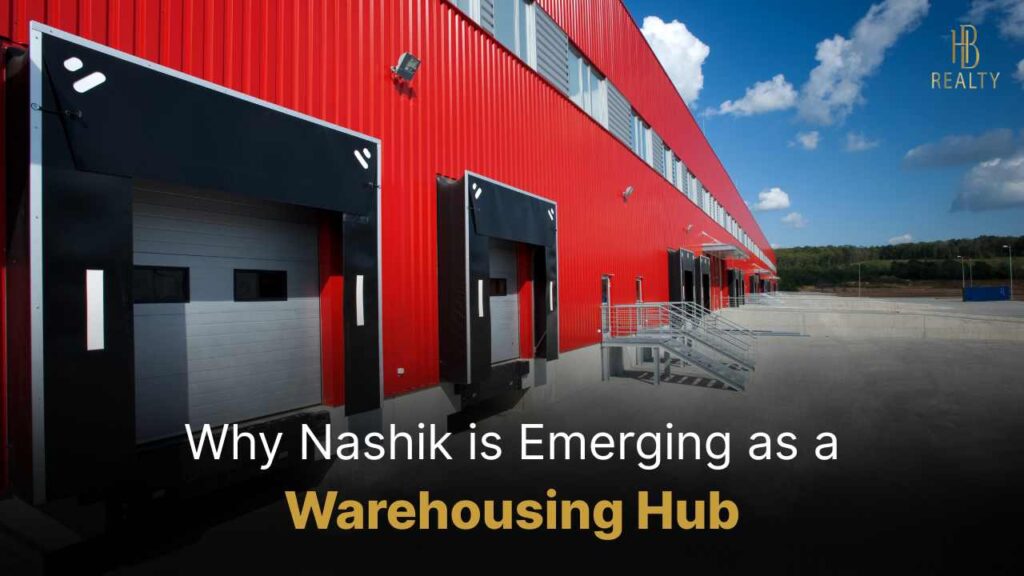
Beyond the Vineyards: Unpacking Nashik’s Rise as a Logistics Powerhouse and Warehousing hub For many years, the identity of Nashik was elegantly simple: a revered city of pilgrimage and the undisputed “Wine Capital of India.” But a new, powerful identity is rapidly taking root and reshaping its economic landscape. If you look beyond the temples and the vineyards today, you will see the foundations of a modern economic powerhouse being laid. In the world of Indian logistics and supply chain management, Nashik is now one of the most talked-about locations, transforming with incredible speed into a vital warehousing hub in Nashik that is attracting significant and sustained national and international attention. This remarkable transformation is not a happy accident or a fleeting trend. It is the result of a powerful convergence of strategic geography, massive government-led infrastructure upgrades, a deep-rooted and diverse industrial base, and a highly favorable cost environment. For decades, Mumbai and Pune have been the twin engines of Maharashtra’s industrial might, but they now face the inevitable challenges of saturation, soaring operational costs, and crippling traffic congestion. This has created a golden opportunity for the next strategic location to rise, and Nashik is seizing this opportunity with both hands. So, what are the specific, concrete factors driving this incredible transformation? What makes industrial investment in Nashik one of the smartest strategic moves for businesses today? Let’s unpack the compelling advantages that are cementing its status as a premier warehousing hub in Nashik. 1. The Power of Position: The Golden Triangle and Beyond In logistics, geography is destiny, and Nashik’s location is arguably its greatest asset. It forms the crucial third vertex of Maharashtra’s “Golden Triangle” of industry and commerce, alongside the behemoths of Mumbai and Pune. This strategic positioning offers a host of unparalleled Nashik logistics benefits. This prime geographical positioning directly translates into lower transit times, reduced fuel costs, faster delivery schedules, and a more resilient, agile supply chain—all critical factors driving industrial investment in Nashik. 2. Connectivity That Clicks: An Infrastructure Revolution A great location is only as good as the infrastructure that serves it. This is where Nashik has experienced a true revolution in recent years, with game-changing, large-scale projects transforming its connectivity and elevating its status as a top-tier warehousing hub in Nashik. This multi-modal connectivity ensures that whether your goods are moving by road or rail, Nashik provides an efficient, reliable, and increasingly uncongested transit point. 3. A Ready-Made and Diverse Industrial Ecosystem Unlike some emerging logistics locations that are essentially starting from scratch, Nashik has the immense advantage of a deep-rooted, mature, and highly diverse industrial ecosystem. This provides a solid and stable foundation for any new warehousing hub in Nashik to build upon. This existing industrial base means that a critical support ecosystem—from skilled labor and transport fleets to component suppliers and maintenance services—is already firmly in place, making it significantly easier for new companies to establish and scale their operations. 4. The Compelling and Sustainable Cost Advantage In a global economy defined by tight margins and a relentless focus on efficiency, cost is a critical differentiator. This is where Nashik offers one of the most compelling Nashik logistics benefits when compared to its metropolitan neighbors. This powerful cost-effectiveness allows companies to build larger, more modern, and better-equipped facilities in Nashik than they could afford elsewhere, enabling greater economies of scale and operational efficiency. 5. A Proactive and Supportive Governance Environment The rise of Nashik is not just happening organically; it is being actively encouraged and strategically guided by government policy. There is a clear and visible intent from both the state and central governments to develop the region as a major economic and logistics hub. Initiatives like the Maharashtra Logistics Policy are designed to streamline approvals, provide incentives for setting up logistics parks, and improve the ease of doing business. Furthermore, Nashik is a key beneficiary of the development of major national industrial corridors like the Delhi-Mumbai Industrial Corridor (DMIC), which is set to channel further large-scale industrial investment in Nashik. The Verdict: A Hub Built for the Future Nashik’s emergence as a premier warehousing hub in Nashik is a powerful story of strategic vision meeting ground-level reality. Its unbeatable location, supercharged by new-age infrastructure, combined with a strong and diverse industrial base and a significant and sustainable cost advantage, creates an almost perfect recipe for logistics success. For businesses looking to optimize their supply chains, de-risk from congested and expensive urban centers, and build a scalable foundation for future growth, Nashik is no longer just an alternative option on the map. It is the strategic destination of choice, poised to play a pivotal role in shaping the future of logistics in India. For official information on industrial development in the region, you can refer to the Invest India profile on Maharashtra.
Client Spotlight: From Land to Lease – A Client Case Study from Pune

From Vision to Reality: How We Built a Foundation for client case study from Pune In the complex world of industrial development, true success stories are not just about closing a deal on a piece of land; they are about forging lasting partnerships and delivering tangible, operational results. They are about the meticulous process of transforming a company’s ambitious vision for growth into a physical, high-functioning reality. This is the story of “Precision Auto Components,” a rapidly growing Tier-1 automotive supplier based in Maharashtra, and how our specialized end-to-end land development approach helped them navigate the immense complexities of expansion in one of India’s most competitive and challenging industrial belts. This detailed client case study from Pune is more than just a project summary. It is a real-world, on-the-ground example of how a strategic, transparent, and deeply collaborative partnership can overcome significant market challenges to deliver a critical project on time, within budget, and, most importantly, perfectly aligned with a client’s long-term strategic goals. It is a blueprint for industrial project success. The Challenge: A Golden Growth Opportunity Meets a Development Bottleneck Precision Auto Components (PAC), a fictional name for a real client, was at an exciting and pivotal crossroads. They had just secured a major, multi-year contract with a leading European car manufacturer, a testament to their quality and reliability. But this golden opportunity came with a significant operational catch. Fulfilling the massive new contract required a substantial expansion of their production capacity, and their existing manufacturing facility in the heart of Pune was already operating at its absolute peak. They needed a new, state-of-the-art manufacturing unit, and given the strict delivery schedules of their new contract, they needed it fast. However, as they began their search, the management team at PAC quickly ran into a series of daunting challenges that are all too common for businesses trying to expand in the Pune industrial region: PAC realized they needed more than just a real estate broker to show them properties. They needed a strategic, full-service partner who could provide a complete, turnkey solution, from identifying the right land to handing over the keys to a ready-to-operate facility, potentially a build-to-suit warehouse and factory. The HB Realty Solution: A Four-Step Strategic Approach to Industrial Project Success When PAC approached us with their challenge, our process began not by showing them a list of properties, but by listening intently. We invested time to understand every nuance of their operational needs, financial constraints, and strategic objectives. Our solution, as detailed in this client case study from Pune, was built on a four-step process designed to de-risk the entire project and manage every complexity on their behalf. Step 1: Strategic, Data-Driven Site Selection Instead of limiting our search to publicly available listings, which are often overpriced or problematic, we activated our deep, on-the-ground network of landowners, local agents, and industry contacts. Our intimate understanding of the region’s development trajectory and upcoming infrastructure plans allowed us to identify a strategic 5.5-acre parcel just off the main highway in the Chakan industrial belt. It was a perfect off-market opportunity that precisely matched PAC’s needs: Step 2: The Ironclad Due Diligence Shield This was the most critical phase of the engagement and the cornerstone of our end-to-end land development service. Our in-house legal and technical teams conducted a rigorous, multi-layered due diligence process that left absolutely no stone unturned. We: We presented PAC with a comprehensive due diligence report, complete with all supporting documents, which gave their board 100% confidence in the legal and technical soundness of the property. Step 3: Seamless Acquisition and Initial Site Development We managed the entire transaction process, from strategically negotiating the final price to drafting the ironclad legal paperwork and completing the registration smoothly. But our work didn’t stop there. As part of our end-to-end land development service, we then oversaw the initial site development, managing the construction of the secure compound wall, building internal access roads, and, crucially, coordinating with the utility departments to ensure the timely sanction and connection of power and water. Step 4: The “Build-to-Suit” Partnership: A Financial and Operational Game-Changer This was the step that truly unlocked the project’s potential for PAC. To conserve their capital for investing in new machinery and expanding their operational team, they opted for our specialized build-to-suit warehouse and factory solution. This model is a perfect example of achieving industrial project success through smart financial structuring. Under this model: This innovative build-to-suit warehouse and factory model allowed PAC to get a brand-new, world-class, custom-built facility without the massive upfront capital expenditure and administrative burden of construction. It freed up their resources and their management’s time to invest in their core business. The Result: A Benchmark for Industrial Project Success By partnering with HB Realty, Precision Auto Components turned a daunting and potentially project-killing challenge into a resounding industrial project success. As the CEO of Precision Auto Components stated: ‘HB Realty was more than a vendor; they were our strategic partner. Their due diligence was impeccable, and the build-to-suit model was a game-changer that preserved our capital. They handled every complexity, letting us focus on what we do best—building our business.’ This client case study from Pune exemplifies our core philosophy: to provide intelligent, transparent, and complete solutions that empower our clients to achieve their ambitions and turn complex challenges into landmark successes. To learn more about the benefits of this model, you can read this insightful article on The Pros and Cons of Build-to-Suits from NAIOP, the Commercial Real Estate Development Association. The Background – Why This Client Case Study from Pune Matters PAC had just secured a multi-year contract with a leading European automobile manufacturer. The opportunity was massive, but so were the challenges: This client case study from Pune illustrates how these hurdles can be overcome with a structured, transparent, and strategically managed process. The Challenge – Land, Legalities, and Limited Time PAC’s expansion requirements demanded a state-of-the-art build-to-suit warehouse and factory on approximately 5 acres, strategically