
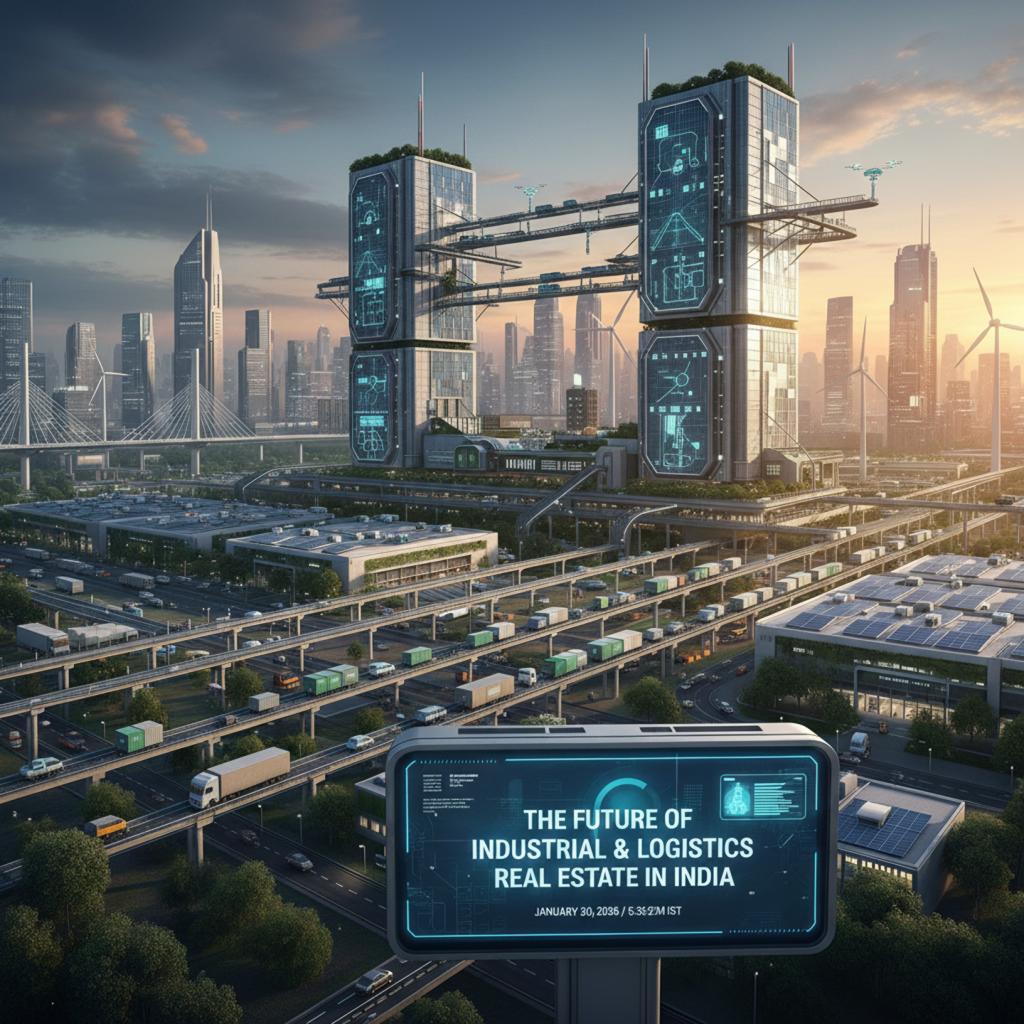
The Future of Industrial & Logistics Real Estate in India
Why the next decade will reward planning, not just expansion
A Shift That Operators Are Already Feeling
Across India, supply chains are facing quiet pressure. Manufacturers are increasing capacity under PLI schemes. E-commerce companies are tightening delivery timelines. Third-party logistics firms are being asked to do more with fewer touchpoints.
Behind the scenes, a familiar constraint keeps appearing: industrial and logistics real estate often does not keep pace with operational needs.
This situation is no longer about lack of demand. Space is being filled. Capital is flowing. What has changed is the nature of the questions decision-makers are asking.
They are no longer asking, “Where can we find land or a warehouse?” Now, they ask, “Will this location, this asset, and this regulatory structure still be viable five or ten years from now?”
The Core Problem: Growth Without Enough Structure
India’s industrial growth story is strong—but unevenly supported.
- Logistics costs remain at 13–14% of GDP, versus 8–9% in developed markets
- Warehousing stock exceeds 250 million sq. ft., yet much of it is not Grade-A
- Many facilities sit on land never intended for long-term industrial use
Historically, development was driven by cost and availability rather than comprehensive planning, with limited focus on long-term infrastructure, compliance, scalability, and exits.
Why This Gap Matters Now
For Occupiers
- Longer truck turnaround times due to poor access
- Higher labor costs from inefficient layouts
- Costly retrofitting for automation or cold storage
- Inflexibility as volumes and models change
For Investors and Developers
- Leasing delays from unclear zoning and approvals
- Lower valuations for non-compliant assets
- Reduced institutional interest due to ESG risks
- Shorter asset life cycles and fewer exit routes
Grade-A assets in many markets show vacancy below 10%, while non-standard facilities struggle even at lower rents. The market is now driven by efficiency and risk—not just price.
The Broader Systems at Play
- Policy: GST, National Logistics Policy, single-window approvals
- Infrastructure: Freight corridors, expressways, port-led development
- Supply chains: China+1, nearshoring, domestic manufacturing
- Capital: Institutional investors, REITs, ESG-linked funding
- Technology: Automation, data-led warehousing, cold-chain expansion
What Happens If This Is Ignored
- Persistently high logistics costs
- Warehousing assets aging prematurely
- Capital locked into assets with limited exits
- Forced relocations or duplicated facilities
- Lost global supply chain competitiveness
A Shift from Space Delivery to Ecosystem Creation
Consolidation After GST
- Larger land parcels
- Stronger highway connectivity
- Reliable utilities
- Clear regulatory frameworks
Corridor-Driven Planning
- NH48, NH16, NH44
- Western & Eastern Dedicated Freight Corridors
- Port-linked industrial zones
- Multimodal logistics parks
Technology Is Reshaping Asset Relevance
Automation can improve warehouse efficiency by 25–30%, but only when facilities are designed for it from the outset.
- Clear heights and optimal column spacing
- High floor load capacity
- Power redundancy
- Flexible layouts
Sustainability Is Now Operational
Many Grade-A parks now meet 20–30% of power demand through rooftop solar, reducing operating costs while improving ESG performance.
The Role of Early-Stage Advisory
Industrial outcomes are increasingly decided before construction begins:
- Land title and zoning clarity
- Approval sequencing
- Infrastructure phasing
- Expansion and exit planning
From Reactive Development to Intentional Planning
Old Approach
- Acquire available land
- Build standard warehouses
- Resolve approvals reactively
- Focus on short-term leasing
Emerging Approach
- Start with corridor and demand analysis
- Align zoning and policy early
- Design for automation and ESG
- Plan for institutional exits
Looking Ahead
Over the next decade, success will be defined not by speed of construction, but by planning discipline, regulatory clarity, and long-term alignment with business strategy.
This is not a short-term trend—it is a structural shift.